Collected some softwares used by different engineers……..

I will slooowly write about these softwares someday,  think you should help ?  Hit me an email through the comment box.

UNIGRAPHICS, IDEAS, CATIA, PRO-E, AUTO CAD, SOLID WORKS, SOLID EDGE, INVENTOR, Fusion 360 used for design engineering.

CAE Projects – Stress analysis, dynamic analysis etc. of aero, auto or mechanical systems can be done through these projects. New design, Improving performance, optimization can be accomplished. FEM based software like ANSYS, NASTRAN, RADIOSS, HYPERMESH, FLUENT, LSDYNAetc. can be used.

CFD Projects – Flow analysis, Thermal analysis, Aerodynamics improvement are the typical projects. This uses software like FLUENT, STAR-CCM+ are used for CFD analysis.

NX is a combination software with multi use.

MATLAB is also an important software for mechanical. It help in solving the difficult mathematical equations and plotting of any curve.

And more softwares …

Allen Bradley PLC

AVEVA PDMS

AMETank v

Ansys Products  v

Aspen Technology aspenONE v

Aspen Technology Hysys v

Autodesk Autocad Civil 3D v

Autodesk Autocad P&ID v

Autodesk Autocad Plant 3D v

Autodesk Autocad v

Autodesk Navisworks Manager v

Autodesk Navisworks Simulate v

AutoPipe

AVEVA Bocad

AVEVA Electrical

AVEVA Everything3D™

AVEVA Instrumentation

AVEVA P&ID

Bentley GeoStructural Analysis v

Bentley Staad Pro V

BR&E Promax V

Calsep PVTsim v

Caxperts 3D SymbolDesigner v For Smart 3D

Caxperts PDS AdminTool v

Caxperts Spec Manager v

Caxperts SpecXpert v

CMG v

Dnv Phast & Safeti v

Dnv Phast & Safeti-Nl v

Drillworks v

DYADEM PHA Pro v

ESI Pipeline Studio v

E-Ware ETank2000 v

Haliburtone Landmark EDM & EDT v

IHS Energy Perform v

IHS Energy Questor

IHS Questor v

Intergraph CADWorx E&I V

Intergraph Cadworx OrthoGen v

Intergraph CadWorx Plant

Intergraph Caesar II

Intergraph PDS  SP

Intergraph PV Elite

Intergraph SmartPlant Electrical

Intergraph SmartPlant Engineering Manager

Intergraph SmartPlant Foundation

Intergraph SmartPlant Instrumentation

Intergraph SmartPlant Isometrics

Intergraph SmartPlant Markup Plus

Intergraph SmartPlant P&ID v

Intergraph SmartPlant Review

Intergraph SmartPlant Spoolgen

Intergraph SP3D

Intergraph Tank

IPM v

KAPPA Ecrin v

KAPPA Emeraude v

KAPPA Server v

KAPPA Server v

KAPPA Workstation v

KBC Infochem Multiflash v

KBC PETROSIM Suite

Landmark EDM & EDT v

MiniTab

OLGA v

Paradigm Sysdrill v

Paradigm v

Paulin Reserach Group(PRG) v

Petrel v All Plugins

Petro-SIM v

Roxar RMS v

Schlumberger Eclipse v

Schlumberger Merak Suite

Schlumberger OFM v

Schlumberger Petrel v

Schlumberger PIPESIM v

Schlumberger Techlog v

Shell FRED v

SMT v

Solid Plant 3D

Solid Plant P&ID

Solid Works

Siemens PLC

SPSS

SPT Group Drillbench v

Tekla Structural Designer

Yokogawa PLC

Zeataline PipeData Pro.
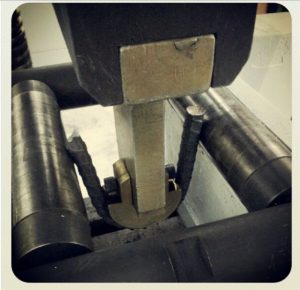


As a Mechanical Engineer Designer, it is important to know the different mechanical properties of material.

The first category of material is metal and second is non-metals. Metals are further classified into two types : Ferrous metals and Non-ferrous metals. Ferrous metals mainly consist iron with comparatively small addition of other materials. It includes iron and its alloy such as cast iron, steel, high speed steel, etc. Ferrous metals are widely used in mechanical industries mainly for its availability. Non-ferrous metals contain little or no iron. It includes aluminum, magnesium, copper, zinc etc.

Courtesy of edphotography

Most Mechanical properties are associated with metals. These are……

#1. Strength:

The ability of material to withstand load without failure is known as strength. If a material can bear more load, it means it has more strength. Strength of any material mainly depends on type of loading and deformation before fracture. According to loading types, strength can be classified into three types.

  • a. Tensile strength:
  • b. Compressive strength:
  • c. Shear strength:

According to the deformation before fracture, strength can be classified into three types.

  • a. Elastic strength:
  • b. Yield strength:
  • c. Ultimate strength:

#2. Homogeneity:

If a material has same properties throughout its geometry, known as homogeneous material and the property is known as homogeneity. It is an ideal situation but practically no material is homogeneous.

#3. Isotropy:

A material which has same elastic properties along its all loading direction known as isotropic material.

#4. Anisotropy:

A material which exhibits different elastic properties in different loading direction known as an-isotropic material.

#5. Elasticity:

If a material regain its original dimension after removal of load, it is known as elastic material and the property by virtue of which it regains its original shape is known as elasticity.

Every material possess some elasticity. It is measure as the ratio of stress to strain under elastic limit.

#6. Plasticity:

The ability of material to undergo some degree of permanent deformation without failure after removal of load is known as plasticity. This property is used for shaping material by metal working. It is mainly depends on temperature and elastic strength of material.

#7. Ductility:

Ductility is a property by virtue of which metal can be drawn into wires. It can also define as a property which permits permanent deformation before fracture under tensile loading. The amount of permanent deformation (measure in percentage elongation) decides either the material is ductile or not.

Percentage elongation = (Final Gauge Length – Original Gauge Length )*100/ Original Gauge Length

If the percentage elongation is greater than 5% in a gauge length 50 mm, the material is ductile and if it less than 5% it is not.

#8. Brittleness:

Brittleness is a property by virtue of which, a material will fail under loading without significant change in dimension. Glass and cast iron are well known brittle materials.

#9. Stiffness:

The ability of material to resist elastic deformation or deflection during loading, known as stiffness.  A material which offers small change in dimension during loading is more stiffer. For example steel is stiffer than aluminum.

#10. Hardness:

The property of a material to resist penetration is known as hardness. It is an ability to resist scratching, abrasion or cutting.

It is also define as an ability to resist fracture under point loading.

#11. Toughness:

Toughness is defined as an ability to withstand with plastic or elastic deformation without failure. It is defined as the amount of energy absorbed before actual fracture.

#12. Malleability:

A property by virtue of which a metal can flatten into thin sheets, known  as malleability. It is also define as a property which permits plastic deformation under compression loading.

#13. Machinability:

A property by virtue of which a material can be cut easily.

#14. Damping:

The ability of metal to dissipate the energy of vibration or cyclic stress is called damping. Cast iron has good damping property, that’s why most of machines body made by cast iron.

#15. Creep:

The slow and progressive change in dimension of a material under influence of its safe working stress for long time is known as creep. Creep is mainly depend on time and temperature. The maximum amount of stress under which a material withstand during infinite time is known as creep strength.

#16. Resilience:

The amount of energy absorb under elastic limit during loading is called resilience. The maximum amount of the energy absorb under elastic limit is called proof resilience.

#17. Fatigue Strength:

The failure of a work piece under cyclic load or repeated load below its ultimate limit is known as fatigue. The maximum amount of cyclic load which a work piece can bear for infinite number of cycle is called fatigue strength. Fatigue strength is also depend on work piece shape, geometry, surface finish etc.

#18. Embrittlement:

The loss of ductility of a metal caused by physical or chemical changes, which make it brittle, is called embrittlement.

Before, if a product fails, it will be made stronger by adding more material or redesign it bigger for better.  Whether the rest of the design was just good enough or make it x times stronger than the first one. Over time, products that never failed were targets for cost reduction as business decision.  It was not a technical decisions anymore, but business cost reduction as it is likely. The design nowadays  would offer the “weaker”  product, the more it was “closely” engineered to lower the cost. It is designed closer to the expected loads. Hence, the need to read the fine print of the manual before using any product.

capiche !