My fellow digital learning designers have been egging me to post my initial thoughts about different digital learning applications, which we tend to come to an agreement that pedagogy now should make use of these technologies in teaching and learning. Digital technologies and methods are mostly use as part of the professor’s tools for teaching.
Most digital learning designers are involve in converting massive old written curriculum into online courses. They can also be creating learning apps, digital exhibits, or the latest automation mostly associated with robotic toys. Below are some of the digital learning apps such as:
LMSs (Learning Management Systems); MOOCs (Massive Open Online Courses); BYOD (bring your own device); BYOT (bring your own technology); BYOC (bring your own connectivity); makerspaces; fablab; fabshop; innolab; robotics; digital portfolios; online discussion forums; blogging platforms; wikis, microblogging; back channels; audio recording and music making; image and video editing; creation of infographics, slideshows, and presentations; digital storytelling; social media; collaboration tools; mobile apps; game-based learning and environments; coding and computer programming; augmented and virtual realities; technologies for creating physical or virtual 3D models; gesture-based computing; learning analytics and statistical analysis software; online authoring tools; wearable technology; affective computing; rubric generators; quizzes; online response systems such as polls and surveys; video conferencing; cloud computing; and student feedback tools such as Safe Assign, Turnitin, GradeMark, and PeerMark.
Students, in one way or another, needs to navigate on these myriads of technologies available, not only to maximize but to speed up learning. Digital technologies also allows to create personalize learning experience that caters to students as a place of engagement and discovery.
My final words, the world is changing with these digital learning applications, it’s just a matter of time until the web-based education technology model replaces the traditional classroom. If one can’t keep up, being left behind is a possibility. Specifically, chances of getting hired are much lower if the applicant can’t prove that they have embrace new ways of learning.
During the 1990s, I am more familiar with GeoCities writers and beta testers than with the neighborhoods in my town. Geocities is one of the most popular and oldest websites in the net that offers sense of being in the state of “wired’ within community, it was one of my first ventures into being the “cybernauts” (not related to the old British film in the 60s) as opposed to web surfers today in this period, to freely and openly become engaged with the internet, GeoCities will always be an important part of web history.
They have taken care to preserve some of my write up that still matters today. Thank you.
picture from oocities.com (formerly Geocites)
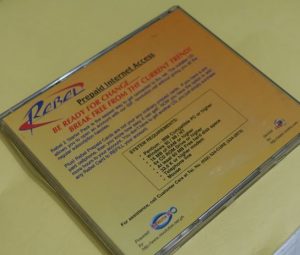
How do I connect in during that period ? The same thing as BBs systems (a.k.a. Bulletin Board) in the 80s, I use 14.4 or 28.8 kbps (if we’re lucky) modem and a prepaid internet card coupled with an installation CD, that look like this.
courtesy of edphotography
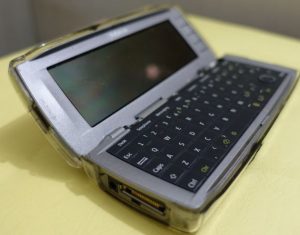
In 2007, mobile tech improvements have made use of the Nokia Communicator that look like this.
Practical laboratory experience is essential for linking together theory and practice. So that the professor has to exert enormous effort to design experiment/s that can inspire students to do critical thinking and become problem solvers.
Take this experience as example, while searching for mechatronics experiments, the professor experienced several difficulties across different mechatronic systems; issues crop up like; install, use, learn, understand, maintain, expensive, host-platform dependent and lack of write-ups. As a result, the professor faces a number of headaches, worst of which is wasting invaluable time trying to teach students how to use these mechatronics system.
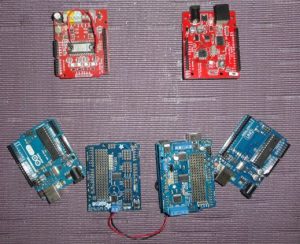
All these problems are address with the introduction of the Arduino development platform (caveat: I’m writing about it, but not endorsing it). An open source (meaning free on certain conditions) platform, the student use their own computer, download the reference manual and software-development tools from the Arduino website, install it with little to no hassle at all on any host platform (e.g., Mac OSX, Windows, Linux). After a few minutes of installation, the student can immediately connect to the embedded development board via USB, compile and download an example program and get instant output via blinking LED from the arduino board. The true benefit of this design is that an embedded systems beginner (the student) can focus their attention on learning how to build the hardware and write the software to interface with peripheral devices they wish to create or prototype.
With this setup, schools no longer need to spend money on a dedicated yet expensive embedded mechatronics lab furthermore, students can practice on their own phase at home.
In 2013, the professor decided to try the Arduino development environment in replacement of “older” mechatronics experiments.
Courtesy of the edphotography.
Unfortunately, at the start of the semester, there were no suitable lecture notes for presenting general knowledge covering the course program using Arduino platform. As a result, the professor collected and created some notes which eventually transformed into this work. He have relied on his industry experience with before mechatronics its instrumentation and control, to provide students with fundamental, yet general knowledge of creating embedded hardware and software using Arduino.
Hopefully, this will result in students learning the core concepts of mechatronics that they can reapply on future projects where they are likely to work on different processors.
The professor’s experiment/workshop will inspire students to explore this fast-growing technology where mechanical, electronics and software collide. That Mechatronics !
Not only that, the experience at the end of the experiment/workshop, students are required to work hard and make their own project that may involve any of the following:
Consumer devices in all fields (health, fitness, travel…)
Gadgets / Toys of the new generation …. maybe drones ?
Consumer devices that have ecosystems
Assistive device for PWDs
Media and Entertainment i.e. VRs anyone ?
Robotics, Bionics, Cybernetics
Mobile Appliances
Green technology devices
Neuro tech of any kind ……. that mind control devices
Collected some softwares used by different engineers……..
I will slooowly write about these softwares someday, think you should help ? Hit me an email through the comment box.
UNIGRAPHICS, IDEAS, CATIA, PRO-E, AUTO CAD, SOLID WORKS, SOLID EDGE, INVENTOR, Fusion 360 used for design engineering.
CAE Projects – Stress analysis, dynamic analysis etc. of aero, auto or mechanical systems can be done through these projects. New design, Improving performance, optimization can be accomplished. FEM based software like ANSYS, NASTRAN, RADIOSS, HYPERMESH, FLUENT, LSDYNAetc. can be used.
CFD Projects – Flow analysis, Thermal analysis, Aerodynamics improvement are the typical projects. This uses software like FLUENT, STAR-CCM+ are used for CFD analysis.
NX is a combination software with multi use.
MATLAB is also an important software for mechanical. It help in solving the difficult mathematical equations and plotting of any curve.
As a Mechanical Engineer Designer, it is important to know the different mechanical properties of material.
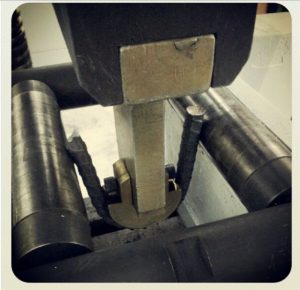
The first category of material is metal and second is non-metals. Metals are further classified into two types : Ferrous metals and Non-ferrous metals. Ferrous metals mainly consist iron with comparatively small addition of other materials. It includes iron and its alloy such as cast iron, steel, high speed steel, etc. Ferrous metals are widely used in mechanical industries mainly for its availability. Non-ferrous metals contain little or no iron. It includes aluminum, magnesium, copper, zinc etc.
Courtesy of edphotography
Most Mechanical properties are associated with metals. These are……
#1. Strength:
The ability of material to withstand load without failure is known as strength. If a material can bear more load, it means it has more strength. Strength of any material mainly depends on type of loading and deformation before fracture. According to loading types, strength can be classified into three types.
a. Tensile strength:
b. Compressive strength:
c. Shear strength:
According to the deformation before fracture, strength can be classified into three types.
a. Elastic strength:
b. Yield strength:
c. Ultimate strength:
#2. Homogeneity:
If a material has same properties throughout its geometry, known as homogeneous material and the property is known as homogeneity. It is an ideal situation but practically no material is homogeneous.
#3. Isotropy:
A material which has same elastic properties along its all loading direction known as isotropic material.
#4. Anisotropy:
A material which exhibits different elastic properties in different loading direction known as an-isotropic material.
#5. Elasticity:
If a material regain its original dimension after removal of load, it is known as elastic material and the property by virtue of which it regains its original shape is known as elasticity.
Every material possess some elasticity. It is measure as the ratio of stress to strain under elastic limit.
#6. Plasticity:
The ability of material to undergo some degree of permanent deformation without failure after removal of load is known as plasticity. This property is used for shaping material by metal working. It is mainly depends on temperature and elastic strength of material.
#7.Ductility:
Ductility is a property by virtue of which metal can be drawn into wires. It can also define as a property which permits permanent deformation before fracture under tensile loading. The amount of permanent deformation (measure in percentage elongation) decides either the material is ductile or not.
Percentage elongation = (Final Gauge Length – Original Gauge Length )*100/ Original Gauge Length
If the percentage elongation is greater than 5% in a gauge length 50 mm, the material is ductile and if it less than 5% it is not.
#8. Brittleness:
Brittleness is a property by virtue of which, a material will fail under loading without significant change in dimension. Glass and cast iron are well known brittle materials.
#9. Stiffness:
The ability of material to resist elastic deformation or deflection during loading, known as stiffness. A material which offers small change in dimension during loading is more stiffer. For example steel is stiffer than aluminum.
#10. Hardness:
The property of a material to resist penetration is known as hardness. It is an ability to resist scratching, abrasion or cutting.
It is also define as an ability to resist fracture under point loading.
#11. Toughness:
Toughness is defined as an ability to withstand with plastic or elastic deformation without failure. It is defined as the amount of energy absorbed before actual fracture.
#12. Malleability:
A property by virtue of which a metal can flatten into thin sheets, known as malleability. It is also define as a property which permits plastic deformation under compression loading.
#13. Machinability:
A property by virtue of which a material can be cut easily.
#14. Damping:
The ability of metal to dissipate the energy of vibration or cyclic stress is called damping. Cast iron has good damping property, that’s why most of machines body made by cast iron.
#15. Creep:
The slow and progressive change in dimension of a material under influence of its safe working stress for long time is known as creep. Creep is mainly depend on time and temperature. The maximum amount of stress under which a material withstand during infinite time is known as creep strength.
#16. Resilience:
The amount of energy absorb under elastic limit during loading is called resilience. The maximum amount of the energy absorb under elastic limit is called proof resilience.
#17. Fatigue Strength:
The failure of a work piece under cyclic load or repeated load below its ultimate limit is known as fatigue. The maximum amount of cyclic load which a work piece can bear for infinite number of cycle is called fatigue strength. Fatigue strength is also depend on work piece shape, geometry, surface finish etc.
#18. Embrittlement:
The loss of ductility of a metal caused by physical or chemical changes, which make it brittle, is called embrittlement.
Before, if a product fails, it will be made stronger by adding more material or redesign it bigger for better. Whether the rest of the design was just good enough or make it x times stronger than the first one. Over time, products that never failed were targets for cost reduction as business decision. It was not a technical decisions anymore, but business cost reduction as it is likely. The design nowadays would offer the “weaker” product, the more it was “closely” engineered to lower the cost. It is designed closer to the expected loads. Hence, the need to read the fine print of the manual before using any product.